How to Choose a Dedicated FTL Carrier in 2026 (Before Spot Rates Eat Your Budget)

Choosing a dedicated FTL carrier is a procurement decision, not a rate-shopping exercise. The 2026 freight market is in a soft recovery: contract rates have held within 5 to 8 percent of 2025 levels, while spot rates dip below contract on slack lanes and spike 15 to 25 percent on tight corridors during peak weeks. That swing is the whole problem. A spot strategy that looks cheap in March can cost you capacity in October. This guide walks through how a dedicated FTL carrier differs from spot or brokered freight, what spot really costs once you count the hidden parts, and the five questions that separate a real asset-based partner from a broker with a logo. MigWay runs 300 trucks and 500 trailers across the Midwest, Southeast, and Mid-Atlantic, so the lane examples here are concrete, not theoretical.
What Is a Dedicated FTL Carrier (and How It Differs From a Spot or Brokered Load)
A dedicated FTL carrier commits specific capacity to a shipper on agreed lanes, usually under a contract that runs a quarter or a year. The shipper gets predictable rates and reserved trucks. The carrier gets predictable freight to plan around. It is a standing arrangement, not a one-off booking.
That stands apart from the two other ways freight moves:
- Spot freight is priced per load at current market conditions. You post a load, carriers bid, and the rate reflects whatever supply and demand looks like that day. Cheap on a soft lane, expensive when capacity tightens.
- Brokered freight routes your load through a middleman who does not own trucks. The broker finds a carrier, takes a margin, and passes the load along. When the market tightens, brokers can lose the carrier they promised, because they are protecting their own margin first.
The core distinction with a dedicated truckload carrier vs the spot market comes down to who owns the equipment. An asset-based carrier owns its trucks and trailers. It does not pull capacity when spot rates climb, because it is not brokering your load to someone else. One accountable plan covers the freight from pickup to delivery.
Why the 2026 Freight Market Makes Dedicated Capacity Worth a Second Look
The 2026 market is recovering slowly, and that is exactly when dedicated capacity earns its keep. Rates are not spiking across the board. They are swinging by lane and by week. Contract pricing has stayed within 5 to 8 percent of last year, while spot moves below contract on soft lanes and jumps 15 to 25 percent on tight corridors during Q2 produce season and the Q4 retail surge.
For a shipper, that volatility is the risk, not the average rate. A dedicated FTL carrier flattens it. You lock a number and reserve trucks, so a tight week does not become a scramble for coverage at surge pricing. The trade is straightforward: you give up the chance to catch a cheap spot rate on a slow week, and you get rate stability and guaranteed access in return.
Dry van spot rates have run $2.05 to $2.80 per mile through the first half of 2026, with flatbed higher at $2.80 to $3.60 per mile. Contract rates for committed volume sit below the spot range on tight lanes. The full breakdown of how those rates get built lives in our 2026 FTL freight rates guide. The point for carrier selection is simpler: the average rate is not what hurts you. The peaks are.
The Real Cost of Spot Freight: What Shippers Do Not Account For
Spot freight looks cheaper than it is, because the per-mile rate hides the parts that cost you later. The sticker price is one line. The total cost of relying on spot is several.
- Peak-season surge. The lane that quotes $2.10 in a soft week can hit $2.60 or higher when capacity tightens. If your volume is steady but your sourcing is spot, you pay the peak every peak.
- Coverage gaps. A posted load that nobody takes is a missed pickup, a late delivery, and an angry customer. Spot does not reserve a truck. It hopes one shows up.
- Fuel surcharge math. A cheap base rate plus a separate fuel surcharge often beats nothing once diesel moves. Comparing base rates alone is how shippers talk themselves into a worse total.
- Broker risk. A spot load run through a broker can get re-brokered or dropped when the broker finds better margin elsewhere. You inherit the failure without controlling the cause.
- Procurement time. Every spot load is a fresh negotiation. Multiply that across 3 to 15 loads a week and the staff hours add up to real money.
Track total cost per load, not the headline rate per mile. A flat all-in number from a dedicated carrier, with fuel already included, is usually the honest comparison point. It is also the easier one to budget against.
5 Questions to Ask Before Signing a Dedicated Carrier Agreement
Knowing how to choose a freight carrier comes down to a handful of questions that surface whether you are talking to an asset-based operator or a broker in carrier clothing.
1. Do you own your trucks, or do you broker loads?
This is the first filter. An asset-based carrier owns its fleet and answers for the freight directly. A broker subcontracts and can lose the truck mid-contract. Ask for the fleet count and equipment types in writing.
2. Is dispatch in-house and available 24/7?
In-house dispatch with zero outsourcing means one team owns your freight around the clock. Outsourced or daytime-only dispatch leaves gaps exactly when a problem load needs a live person at 2 a.m.
3. How do you handle tracking and proof of delivery?
Live ELD and GPS tracking on every load is the standard to expect in 2026. Ask how you get status updates and how fast a POD comes back after delivery.
4. Is your rate flat and all-in, or are there add-ons?
A flat all-in rate folds fuel and standard charges into one number. Watch for quotes that look low until detention, fuel surcharge, and layover lines get added at invoicing. Get the total cost of a load up front.
5. Can you commit capacity on my specific lanes?
A dedicated agreement is only as good as the carrier's footprint. Confirm they actually run trucks on your origins and destinations, not that they will try to find someone who does.
Which Freight Lanes Benefit Most From a Dedicated Carrier Setup
Dedicated capacity pays off most where volume is steady and the lane tightens seasonally. If you move 3 to 15 full truckload dedicated lanes a week on repeatable corridors, you are the textbook case. The three corridor clusters below carry the strongest round-trip freight in MigWay's footprint, which is what keeps dedicated rates sharp.
- Midwest to Southeast (I-65 and I-75). Ohio, Indiana, Kentucky, and Michigan down into Tennessee, Georgia, and the Carolinas. Heavy manufacturing and distribution volume, strong backhaul, predictable transit.
- Midwest to Mid-Atlantic (I-70 and I-77). Illinois and the Ohio Valley out to North Carolina, Virginia, and the Maryland corridor. A workhorse lane for distributors feeding East Coast demand.
- Texas to Southeast (I-20 and I-40). Texas and the lower Mississippi Valley into Tennessee, Georgia, and Alabama. The western anchor of the network, useful for manufacturers shipping east.
Lanes with weak backhaul or one-off volume are a poorer fit for dedicated setups. They are where spot still makes sense. The table below shows how lane balance drives where a dedicated agreement returns the most value.
| Lane Profile | Volume Pattern | Best Sourcing Model |
|---|---|---|
| Steady, repeatable corridor with strong backhaul | 4 or more loads per month, same lane | Dedicated contract |
| Seasonally tight lane (Q2 or Q4 spikes) | Predictable but peaks hard | Dedicated contract |
| Irregular or one-off volume | Hard to forecast | Spot |
| Core volume plus overflow | Steady base, variable surge | Dedicated for base, spot for overflow |
How MigWay's Dedicated Dry Van Lanes Work (IL, IN, OH, TN, GA, TX)
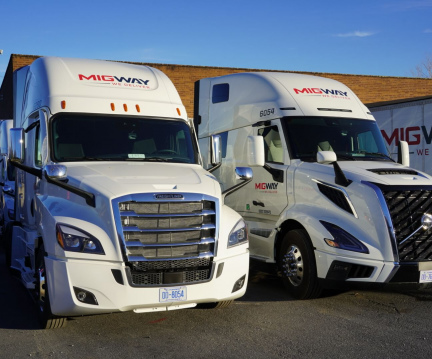
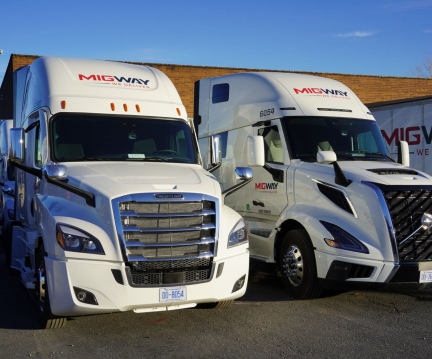
MigWay is an asset-based carrier running 300 trucks and 500 trailers with 24/7 in-house dispatch and zero outsourcing. Dry van FTL is the core service. Every load gets live ELD and GPS tracking, and one accountable plan covers it from driver assignment through proof of delivery. Governing speed is 70 mph for consistent, predictable transit across all lanes.
MigWay's strongest dedicated dry van corridors run through Illinois, Indiana, Ohio, Tennessee, Georgia, and Texas. Rates are flat and all-in, fuel and all standard charges included. One number up front, no add-ons. Sample published dry van lane pricing:
| Origin States | Destination States | Rate Per Mile | Flat Minimum |
|---|---|---|---|
| Ohio, Indiana, Kentucky, Michigan | Tennessee, Georgia, Alabama, Mississippi | $2.00 | $1,000 |
| Ohio, Indiana, Kentucky, Michigan | North Carolina, Virginia, Maryland, South Carolina | $2.00 | $1,000 |
| Illinois, Missouri, Nebraska, Kansas | Ohio, Indiana, Kentucky, Michigan | $2.50 | $1,900 |
| Illinois, Missouri, Nebraska, Kansas | Texas, Arkansas, Louisiana | $2.00 | $1,900 |
| Texas, Arkansas, Louisiana, Oklahoma | Tennessee, Georgia, Alabama, Mississippi | $2.00 | Call to confirm |
These are dry van rates. For flatbed freight or lanes outside these corridors, including any Northeast moves, call MigWay to confirm current capacity and pricing. Full lane detail and how rates are built is in the 2026 FTL freight rates guide.
To set up a dedicated lane, you need four things ready: origin zip, destination zip, commodity type, and target volume per week. Get a dedicated lane quote at migway.com/calculate or call in-house dispatch directly at +1-980-255-3200, 24 hours a day. Choosing a dedicated FTL carrier in 2026 is mostly about locking reliable capacity before the next tight week arrives, and an asset-based partner is the one that does not disappear when it does.
Frequently Asked Questions
What is a dedicated FTL carrier?
A dedicated FTL carrier commits specific trucks and capacity to a shipper on agreed lanes, usually under a contract. The shipper gets reserved equipment and predictable rates. The carrier gets steady freight to plan around. It differs from spot freight, which is priced per load at current market conditions.
What is the difference between a dedicated truckload carrier and the spot market?
A dedicated carrier reserves capacity at a fixed rate over a contract term. The spot market prices each load individually based on daily supply and demand. Spot can be cheaper on soft lanes but spikes during tight periods. Dedicated trades that upside for rate stability and guaranteed access.
Is a dedicated carrier worth it in the 2026 freight market?
For steady volume on repeatable lanes, usually yes. The 2026 market swings by lane and season rather than rising evenly, so spot rates can spike 15 to 25 percent on tight corridors during peak weeks. A dedicated agreement locks a rate and reserves trucks, which protects against those peaks.
How do I choose a freight carrier I can rely on?
Confirm the carrier owns its trucks rather than brokering loads, runs in-house dispatch around the clock, tracks every load with ELD and GPS, quotes a flat all-in rate, and actually runs capacity on your lanes. Those five checks separate an asset-based partner from a broker.
Why are asset-based carriers better for dedicated contracts than brokers?
Asset-based carriers own their trucks, so they do not pull capacity when the spot market tightens. A broker subcontracts loads and can lose the promised carrier when better margin appears elsewhere. With an asset-based carrier, one team is accountable for the freight from pickup to delivery.
What lanes does MigWay run for dedicated freight?
MigWay's strongest dry van corridors run through the Midwest, Southeast, and Mid-Atlantic, including Illinois, Indiana, Ohio, Tennessee, Georgia, and Texas. Primary flows move Midwest to Southeast, Midwest to Mid-Atlantic, and Texas to the Southeast. Call +1-980-255-3200 to confirm capacity on a specific lane.
Does MigWay charge fuel surcharges on dedicated lanes?
No. MigWay uses flat all-in pricing. The quoted rate per mile includes fuel and all standard charges. There are no separate fuel surcharge lines, detention add-ons, or secondary fees. The quoted number is the total cost of the load.
How much volume do I need to set up a dedicated lane?
Dedicated setups make the most sense at roughly four or more loads per month on the same lane, which gives a carrier enough predictability to sharpen the rate. Shippers moving 3 to 15 full truckloads per week on repeatable corridors are the strongest fit. Lower or irregular volume often suits spot better.
Does MigWay run flatbed for dedicated freight?
MigWay's published dedicated lane rates cover dry van. For flatbed freight or lanes outside the standard corridors, contact MigWay directly to discuss current equipment availability and pricing. Call +1-980-255-3200 for a flatbed quote.
How fast can I get a dedicated lane quote from MigWay?
Same-day quotes are standard. The online calculator at migway.com/calculate returns an instant estimate. Calling +1-980-255-3200 connects to in-house dispatch 24/7, with no waiting on a broker to check third-party capacity.
See also