Chicago to Nashville Freight Shipping: FTL Rates, Transit Times & Carrier Options (2026)

The Chicago to Nashville corridor is one of the most active freight lanes in the Midwest-to-Southeast artery. Running roughly 470 miles down I-65, it connects two of the country's most freight-intensive metros - one a global distribution hub, the other the fastest-growing logistics market in Tennessee. Auto parts, consumer goods, steel, and retail inventory move this lane daily. If you're shipping full truckload freight on this corridor in 2026, here's what rates, transit times, and carrier options actually look like right now.
Chicago to Nashville Freight: Key Lane Snapshot
Distance from Chicago to Nashville runs 460 to 490 miles depending on your origin and destination points. The primary route is I-65 South through Indianapolis, with some loads routing via I-57 to I-24 through Paducah for certain origin points on Chicago's south side. Either way, this is a solid overnight lane.
Freight flowing southbound on this lane is dense and varied. Chicago ships consumer goods, packaged food, retail replenishment, steel coil, and industrial equipment into Nashville and its surrounding counties. Northbound, Nashville's auto manufacturing output - it sits inside a 150-mile radius of several major assembly plants - drives consistent dry van and flatbed volume back toward Chicago's distribution network.
| Route | Primary Highway | Approx. Miles | Key Freight Types |
|---|---|---|---|
| Chicago, IL to Nashville, TN | I-65 South via Indianapolis | ~470 mi | Consumer goods, auto parts, steel, retail |
| Chicago, IL to Smyrna/Murfreesboro, TN | I-65 South to I-24 | ~495 mi | Auto parts, manufacturing components |
| Chicago, IL to Clarksville, TN | I-65 South to I-24 | ~510 mi | Distribution, packaged goods |
| Chicago, IL to Nashville (south side origin) | I-57 to I-24 | ~470 mi | General freight, flatbed, building materials |
Nashville's industrial growth has accelerated since 2022. The metro now anchors a significant share of Middle Tennessee's warehousing and distribution capacity, which means load availability on the return lane is strong - a factor that keeps southbound rates competitive.
FTL Dry Van Rates on the Chicago-Nashville Corridor in 2026
National spot dry van rates averaged $2.68 per mile as of late April 2026, according to DAT Trendlines, with Midwest van rates running higher at around $2.88 per mile. Flatbed spot rates sat at $3.46 per mile nationally through the same period. Those are market averages - your actual rate on this specific lane depends on carrier type, volume commitment, and booking lead time.
Contract pricing on the Chicago-Nashville lane currently runs in the $3.05 to $3.50 per mile range for dry van, with spot loads trending toward the lower end of that band when capacity is available. Flatbed lanes price higher, typically $3.50 to $4.25 per mile, driven by equipment scarcity and the labor requirements around securement and tarping.
| Service Type | Spot Rate Range ($/mi) | Contract Rate Range ($/mi) | Typical Load Total |
|---|---|---|---|
| Dry Van FTL | $2.68 - $2.95 | $3.05 - $3.50 | $1,260 - $1,640 |
| Flatbed FTL | $3.25 - $3.75 | $3.50 - $4.25 | $1,530 - $1,995 |
MigWay's rates on Chicago to Nashville lanes are flat and all-in. Fuel and all standard charges are included. One number up front - no fuel surcharge line items, no add-ons at delivery. Contact MigWay at +1-980-255-3200 for a same-day quote on your specific origin and destination.
Two variables move rates more than anything else on this lane: seasonality and booking lead time. Q4 retail peak (October through mid-December) consistently tightens capacity on southbound I-65 lanes as Nashville-area distribution centers replenish retail inventory. Booking 5 to 7 business days out on contract gives you more predictable pricing than spot. Shippers running irregular volume face more rate volatility.
How Tariffs Are Affecting Chicago-Nashville Freight Costs Right Now
Tariffs are hitting this lane from two directions. First, they're raising truck and trailer acquisition costs. The American Trucking Associations has noted that a 25% tariff on steel and components could add up to $35,000 to the price of a new Class 8 truck, which pushes smaller carriers to defer fleet replacement and tightens available capacity over time. That tightening supports higher rates, particularly on lanes where equipment utilization is already high.
Second, tariff uncertainty is changing shipper behavior. Consumer goods manufacturers and importers routing product through Chicago's distribution network have been front-loading inventory to beat anticipated duty increases, which created a volume spike earlier in 2026. That surge has moderated, but the underlying pattern - shipper behavior driven by trade policy anxiety rather than end demand - creates unpredictable volume swings that make spot capacity harder to price and secure.
For shippers moving goods with significant imported-component exposure (electronics, appliances, automotive parts), locking in contract rates with an asset-based carrier on this lane insulates you from spot market swings tied to trade news cycles. A broker can quote you a lower rate today, but when capacity tightens on a tariff announcement, that capacity disappears first from brokers' boards.
Transit Times: What to Expect from Chicago to Nashville by Truck
Chicago to Nashville is an overnight lane for most standard dry van and flatbed moves. A driver departing Chicago in the late afternoon or evening can deliver to the Nashville metro the following morning within appointment windows. The 470-mile run fits comfortably within one driving cycle under current HOS rules.
| Pickup Scenario | Typical Delivery Window | Notes |
|---|---|---|
| Afternoon pickup (2-5 PM CST) | Next morning (7-11 AM CST) | Standard overnight service |
| Morning pickup (7-10 AM CST) | Same day (5-9 PM CST) or next morning | Depends on HOS reset timing |
| Drop-and-hook | Driver-independent | Available with pre-loaded trailers |
| Appointment-sensitive delivery | As specified, typically next-day AM | Confirm window with carrier at booking |
Chicago congestion is the primary variable that can push a same-day pickup into a next-morning departure. Facilities near the Illinois Tollway interchange, I-55 south of the city, and I-65's Indiana entry point at Hammond all see predictable rush-hour slowdowns. Build that into your pickup appointment if your shipping dock is in a high-traffic area.
Drop-and-hook operations are available with MigWay when pre-loaded trailers are in position. For shippers with high-frequency volume on this lane, drop-and-hook eliminates driver dwell and keeps your OTP numbers clean. Ask about trailer positioning when you request a quote.
Flatbed vs. Dry Van: Which Service Fits Your Nashville-Bound Freight?
The Chicago-Nashville corridor moves both services in meaningful volume. The right choice depends on your freight's characteristics - not just commodity type, but dimensions, load configuration, and receiver capability.
Dry Van
Dry van is the right call for palletized freight, packaged consumer goods, retail inventory, automotive components in boxes or crates, and any shipment that needs protection from weather and road spray during transit. Nashville's retail and distribution infrastructure is largely dock-door-oriented, so dry van unloads cleanly at most facilities in the metro.
- Standard 53-foot trailer capacity: up to 45,000 lbs and 26 standard pallets
- Best for: consumer goods, packaged food, retail replenishment, automotive parts in packaging
- Receiver requirement: dock door or lift gate (if needed, specify at booking)
- Weather protection throughout transit
Flatbed
Flatbed is required when freight can't be loaded through a dock door, exceeds standard trailer height or width, or needs crane or forklift loading from the side or top. The Chicago-Nashville corridor carries consistent flatbed volume - steel coil and structural steel moving into Middle Tennessee's construction and manufacturing operations, and heavy equipment moving both directions.
- Standard flatbed: 48-foot or 53-foot deck, up to 48,000 lbs
- Best for: steel, lumber, machinery, construction materials, oversized industrial freight
- Tarp service available for weather-sensitive flatbed loads
- Securement to federal and state DOT standards on every load
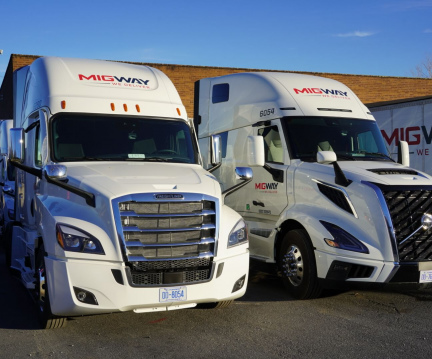
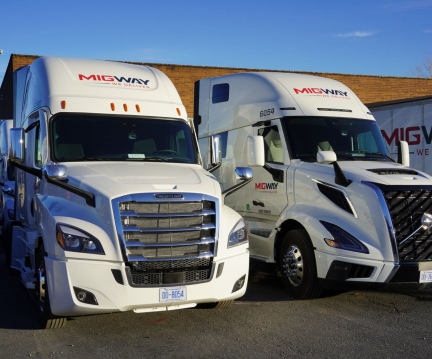
MigWay runs both dry van and flatbed on this lane. The fleet includes 2023-2027 Freightliner Cascadia, Volvo, and Mack units, all automatic. If you're not sure which service your freight requires, call the dispatch team and describe your load dimensions and receiver setup.
How to Book a Reliable FTL Carrier on This Lane
The Chicago to Nashville lane has solid carrier density, but not all capacity is equal. Here's what separates a reliable booking from a rate-only decision that creates service problems.
Asset-based vs. broker capacity
An asset-based carrier owns the trucks and employs the drivers. When you book with an asset-based carrier, you know exactly who is moving your freight and where they are. A broker is a middleman - they find a carrier after you book, which means your load can be re-tendered in tight markets or assigned to a carrier you've never vetted. On a high-frequency lane like Chicago-Nashville, consistent service means asset-based.
What to confirm before you book
- Live tracking availability - ELD and GPS visibility into your load's location
- 24/7 dispatch access - someone who can answer at 2 AM if there's a delivery issue
- Driver assignment timing - when will a driver be confirmed for your pickup?
- All-in rate confirmation - what's included and what isn't
- Drop-and-hook availability if your volume supports it
Lead time
Booking 2 to 5 business days out gives you the best rate and driver availability on this lane. Same-day and next-day bookings are possible but may carry a premium, particularly during Q4 and in periods where tariff-driven volume spikes are active.
Why Shippers Use MigWay for Chicago-Nashville Freight
MigWay is an asset-based carrier running dry van and flatbed service on the Chicago-Nashville corridor. No outsourcing, no broker handoffs - your load is assigned to a MigWay driver in a MigWay truck from pickup to delivery.
- Fleet size: 300 trucks and 500 trailers, with coverage across the East Coast, Northeast, and Midwest
- 24/7 dispatch: In-house, staffed around the clock. Live people, not an answering service
- Live tracking: ELD and GPS on every load, every mile
- Dual service: Dry van and flatbed on the same lane, managed under one accountable plan
- All-in pricing: One number at booking. Fuel and standard charges included - no add-ons at delivery
- Governed fleet: All trucks governed at 70 mph for consistent transit times and safety
Shippers with high-frequency Chicago-Nashville volume use MigWay because the service is predictable and the rate is a real number. No fuel surcharge surprises, no last-minute re-tendering, no tracking through a third party's portal.
To get a same-day rate quote on Chicago to Nashville FTL shipping, call +1-980-255-3200 or submit your load details online. Have your origin zip code, destination zip code, commodity, and pickup date ready and you'll have a number within the hour.
Frequently Asked Questions
How many miles is Chicago to Nashville by truck?
The Chicago to Nashville truck route runs approximately 460 to 490 miles depending on your pickup and delivery addresses. The primary route follows I-65 South through Indianapolis. Some south-side Chicago origins route via I-57 to I-24, adding a few miles but avoiding downtown congestion.
What is the current FTL rate from Chicago to Nashville?
In 2026, dry van FTL rates on the Chicago-Nashville lane run approximately $2.68 to $3.50 per mile depending on spot vs. contract pricing and booking lead time. Flatbed rates are higher, typically $3.25 to $4.25 per mile. MigWay quotes flat all-in rates that include fuel and all standard charges - call +1-980-255-3200 for a same-day number.
How long does freight take to get from Chicago to Nashville?
Chicago to Nashville is an overnight lane under standard HOS rules. An afternoon pickup in Chicago typically delivers to Nashville the following morning. Morning pickups may deliver the same evening or the next morning depending on the driver's available hours. Drop-and-hook operations can reduce dwell time and improve delivery predictability.
Is Chicago to Nashville a good backhaul lane?
Yes. Nashville's auto manufacturing and distribution activity generates consistent northbound volume back toward Chicago. Strong backhaul availability on this corridor helps keep southbound rates competitive compared to lanes where trucks reposition empty. Carriers with Midwest-Southeast coverage typically manage this lane without significant deadhead.
Do tariffs affect freight rates on the Chicago-Nashville lane?
Yes, in two ways. Higher steel and component tariffs have raised truck and trailer acquisition costs for carriers, which supports firmer rate floors over time. Trade policy uncertainty has also created front-loading behavior among importers distributing through Chicago, generating volume spikes that tighten spot capacity unpredictably. Contract pricing with an asset-based carrier reduces your exposure to those swings.
What types of freight move on the Chicago to Nashville corridor?
Consumer goods and retail inventory dominate dry van volume southbound. Auto parts and manufacturing components move in both directions, tied to Middle Tennessee's assembly plant cluster. Steel, structural materials, and heavy industrial equipment move on flatbed. Packaged food and distribution center replenishment freight is also a consistent part of this lane's volume.
What is the difference between spot and contract rates on this lane?
Spot rates are priced load by load based on current market capacity. They're typically lower when trucks are available and higher when capacity tightens. Contract rates are negotiated in advance for committed volume - usually 15 to 30 percent higher than average spot rates because the carrier is guaranteeing service regardless of market conditions. For shippers with regular Chicago-Nashville volume, contract pricing provides cost predictability and service priority.
Does MigWay offer flatbed service from Chicago to Nashville?
Yes. MigWay runs flatbed service on this lane alongside dry van. The fleet runs 2023-2027 Freightliner Cascadia, Volvo, and Mack units, all automatic. Tarp service is available for weather-sensitive loads. Call +1-980-255-3200 to confirm equipment availability for your pickup date.
How do I get a rate quote for Chicago to Nashville freight shipping?
Call MigWay directly at +1-980-255-3200 with your origin zip code, destination zip code, commodity description, trailer type, and pickup date. You'll receive a flat all-in rate that includes fuel and all standard charges. No fuel surcharge line items, no add-on fees at delivery.
What should I look for when choosing a carrier on this lane?
Prioritize asset-based carriers over brokers for consistent service on a recurring lane. Confirm live tracking capability, 24/7 dispatch access, and an all-in rate structure before booking. Ask about driver assignment timing and whether drop-and-hook is available if your volume supports it. On a high-frequency lane like Chicago-Nashville, service reliability is worth more than a lower per-mile rate that disappears when capacity tightens.
See also