Why Choose an Asset-Based Carrier for Reliable Shipping Solutions

An asset-based carrier owns the trucks, employs the drivers, and controls the dispatch desk. When your freight moves on company equipment, there is no middle layer between your load and the people responsible for it. MigWay runs 400 trucks and 750 trailers across all 48 contiguous states, with 24/7 in-house dispatch and live tracking on every load. This article explains what asset-based service means in practice, how it compares to brokered capacity, and what it does for your on-time performance in 2026.
What an Asset-Based Carrier Actually Is
An asset-based carrier moves freight on equipment it owns and drivers it employs. The carrier controls maintenance schedules, driver hiring standards, safety programs, and dispatch. Every link in the service chain answers to one operations team.
Contrast that with a broker or a carrier that outsources overflow. A broker sells capacity it does not own. Your load gets posted, bid on, and covered by whichever truck accepts it. Service quality changes load to load because the truck changes load to load.
The distinction matters most when something goes wrong. A blown appointment, a weather delay, a receiver that refuses a trailer. With an asset-based operation, the dispatcher who answers the phone can reroute a company truck. With brokered freight, the person who answers the phone has to call someone else.
Asset-Based vs. Brokered Freight: Side by Side
Both models move freight. The difference is control, and control shows up in your routing guide metrics: tender acceptance, on-time pickup, on-time delivery, and claims resolution speed.
| Factor | Asset-Based Carrier | Brokered Capacity |
|---|---|---|
| Who hauls the load | Company trucks, company drivers | Whichever carrier accepts the posting |
| Driver vetting | Direct hiring standards, minimum 2 years recent OTR at MigWay | Varies by covering carrier |
| Tracking | ELD and GPS on every unit, one data feed | Depends on the covering carrier's telematics |
| Problem resolution | Dispatch reroutes company equipment directly | Broker relays requests to a third party |
| Rate structure | Flat all-in pricing possible | Spot volatility plus accessorial disputes |
| Claims | One party holds the cargo liability | Claims routed through the covering carrier |
Brokers have a place in surge markets. But for repeatable lanes where OTP is measured weekly, owned capacity removes the variables that wreck scorecards.
Top Benefits of Utilizing an Asset Trucking Company
The comparison above covers the structural differences. Here is what those differences produce on your side of the dock:
- Higher tender acceptance. An asset carrier accepts loads against known equipment positions, not against a hope of finding coverage. Your primary carrier acts like a primary carrier.
- Consistent on-time performance. The same trucks, drivers, and dispatch team run your lane every week. Repeatability is what keeps OTP above threshold on retail scorecards.
- One point of accountability. Service failures, detention questions, and claims go to one operations team. No relay through a broker to a covering carrier you never chose.
- Predictable pricing. Owned capacity supports flat all-in rates that hold. MigWay quotes one number with fuel and standard charges included, which stabilizes your budgeted cost per load.
- Uniform tracking data. Every load reports through the same ELD and GPS feed. Your team gets one data format instead of a patchwork of third-party telematics.
- Vetted drivers on your property. Direct-hire drivers meet one hiring standard. At MigWay that means a minimum of 2 years recent OTR experience before a driver touches your freight.
- Drop trailer flexibility. A carrier with 750 trailers can stage equipment at your facility. That cuts dwell, speeds turns, and keeps dock labor productive.
- Lower cargo risk. One party maintains the equipment, insures the freight, and resolves claims. Fewer hands on the load means fewer points of failure.
These benefits compound over a contract cycle. A lane that runs clean for 12 months costs less to manage than one that needs weekly firefighting, even at an identical linehaul rate.
Who This Serves
Asset-based capacity fits shippers who run scheduled freight and get graded on performance:
- Manufacturers with production schedules that cannot absorb missed pickups: steel, machinery, building products, packaging, food and beverage.
- Distributors feeding retail DCs with strict appointment windows and chargeback exposure.
- 3PLs that need a core carrier with consistent tender acceptance to anchor a routing guide.
- E-commerce operations moving replenishment freight between fulfillment nodes on tight cycles.
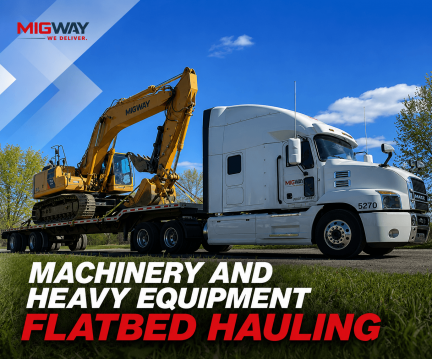
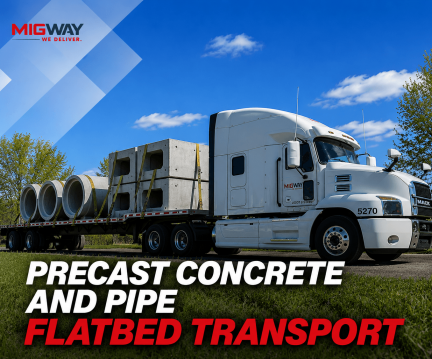
- Project shippers with flatbed freight that requires tarping, securement, and drivers who do it right the first time.
MigWay runs dry van, flatbed, full truckload, and drayage. Standard lead time is 12-24 hours, with expedited coverage available in as little as 4 hours.
Capacity You Can Verify
Capacity claims are easy to make. Owned capacity is easy to check. MigWay's fleet:
- 400 company trucks: 2023-2027 Freightliner Cascadia, Volvo, Mack, and Western Star units
- 750 trailers, dry van and flatbed, with drop trailer programs available
- All trucks governed at 70 mph for safety and consistent transit planning
- ELD and GPS on every unit for live tracking, no blind spots between check calls
- Terminals in Charlotte, NC (headquarters), with Dayton, OH and Harrisburg, PA opening soon
A newer fleet is not a vanity metric. It means fewer breakdowns in transit, better fuel economy, and drivers who want to stay in the equipment. Driver retention shows up on your dock as familiar faces who know your facility.
Rate Structure: Flat and All-In
MigWay quotes one number. Fuel and all standard charges are included. There are no fuel surcharge tables to reconcile and no accessorial line items appearing on the invoice after delivery. The rate you accept is the rate you pay.
Sample dry van rates on common corridors in 2026:
| Lane | Rate | Flat All-In |
|---|---|---|
| North Carolina to New York, Pennsylvania, Delaware | $3.75/mi | $1,850 |
| Ohio, Indiana, Kentucky, Michigan to Maryland, Virginia, Carolinas | $4.00/mi | $2,000 |
| Illinois, Missouri, Nebraska to Texas, Arkansas, Louisiana | $4.00/mi | $1,900 |
| Pennsylvania, New York to Maryland, Virginia, Carolinas | $3.00/mi | $1,600 |
| Any origin to Florida | $5.00/mi | - |
One number up front simplifies freight audit and pay. Your finance team matches one rate to one invoice, and rate disputes drop to near zero.
The Operating Playbook
Reliable service is a process, not a promise. Here is how a load moves through MigWay's system:
- Intake. Tender by phone, email, or EDI. Standard lead time is 12-24 hours; expedited loads can be covered in 4 hours.
- Driver assignment. Dispatch assigns a company driver with a minimum of 2 years recent OTR experience. You get the truck and driver details before pickup.
- Loading. Drivers arrive inside the appointment window. Drop trailer programs cut dwell for high-volume facilities.
- In-transit. Live ELD and GPS tracking on every load. Dispatch monitors progress 24/7 and flags exceptions before they become misses.
- Delivery. POD captured and transmitted promptly. Any OS&D issue goes to one accountable team, not a chain of intermediaries.
Zero outsourcing means this playbook applies to every load, not just the ones that fit a preferred network.
Why MigWay: An Asset-Based Carrier Built for Scorecards
Plenty of carriers own trucks. The difference is how the operation is run:
- Zero outsourcing. Your freight moves on MigWay equipment with MigWay drivers. No re-brokering, ever.
- 24/7 in-house dispatch. Live people around the clock, not an after-hours answering service.
- One accountable plan. One team owns the load from tender to POD.
- 48-state service across dry van, flatbed, full truckload, and drayage.
- Flat all-in rates. One number, no add-ons, clean freight audit.
- Modern fleet. 400 trucks and 750 trailers, model years 2023-2027.
- EDI capable for tendering, status updates, and invoicing inside your TMS.
To scope a lane or set up a capacity commitment, call +1-980-255-3200 or request a quote online. Send the origin, destination, freight profile, and volume, and dispatch will price it as one flat all-in number.
Frequently Asked Questions
What is an asset-based carrier?
An asset-based carrier owns its trucks and trailers and employs its drivers. It moves freight on its own equipment rather than reselling capacity from other carriers. This gives the carrier direct control over service, safety, and communication.
What is the difference between an asset-based carrier and a freight broker?
A broker arranges transportation but does not own equipment. Your load is covered by a third-party carrier the broker selects. An asset-based carrier hauls the load itself, so the party you hired is the party moving your freight.
Does MigWay ever broker out freight?
No. MigWay operates with zero outsourcing. Every load moves on company equipment with company drivers, backed by 24/7 in-house dispatch.
How large is MigWay's fleet?
MigWay runs 400 trucks and 750 trailers. Tractors are 2023-2027 Freightliner Cascadia, Volvo, Mack, and Western Star units, all governed at 70 mph.
What services does MigWay offer?
MigWay provides dry van, flatbed, full truckload, and drayage services across all 48 contiguous states. Drop trailer programs are available for high-volume facilities.
How much lead time does MigWay need to cover a load?
Standard lead time is 12-24 hours. For urgent freight, MigWay can cover expedited loads in as little as 4 hours depending on equipment position.
Are MigWay's rates really all-in?
Yes. Every rate is flat and all-in, with fuel and all standard charges included. The number quoted is the number invoiced, which keeps freight audit simple.
Can I track my shipment in real time?
Yes. Every truck runs ELD and GPS, so every load has live tracking. Dispatch monitors loads 24/7 and communicates exceptions before they affect your delivery.
Is MigWay EDI capable?
Yes. MigWay supports EDI for load tendering, status updates, and invoicing, so shipments can be managed inside your existing TMS workflow.
What experience do MigWay drivers have?
Every MigWay driver has at least 2 years of recent OTR experience before hire. Drivers operate modern automatic equipment, which supports retention and consistent service on your docks.
See also